
Can Your Business Reach Global Customers If Your Videos Speak Only One Language?
Your next customer may already be watching your videos—but they might not understand a single word you say. As businesses expand into international markets, language has become one of the biggest barriers to engagement, conversions, and brand trust. Producing high-quality video content is no longer enough; making it accessible and culturally relevant is what drives global success.
This is where video localization services create a competitive advantage. Instead of simply translating dialogue, video localization adapts your content to match the language, culture, preferences, and expectations of different audiences. From video translation services and subtitle localization to professional video dubbing, localization helps businesses connect with viewers in a way that feels authentic rather than translated.
Companies such as Netflix, Airbnb, HubSpot, and Canva have demonstrated that localized content significantly improves audience engagement across international markets. Whether you’re a SaaS company launching a product globally or a marketing team running multilingual campaigns, investing in video localization can dramatically increase your content’s reach and impact.
What Are Video Localization Services and Why Do They Matter?
Many people confuse translation with localization, but they serve different purposes. Translation converts words from one language into another, while localization adapts an entire viewing experience to fit a specific market. It considers language, cultural references, visual elements, currencies, measurement units, humor, and even voice tone.
Imagine a software company releasing an English product demo in Japan. Simply translating the script into Japanese may communicate the message, but it won’t necessarily resonate with local customers. A localized version would also adapt user interface screenshots, replace idioms with culturally appropriate expressions, modify date and time formats, and use a native Japanese voice artist to create a more natural experience.
This attention to detail makes viewers feel that the content was created specifically for them rather than translated as an afterthought. That difference directly influences engagement, trust, and purchasing decisions.
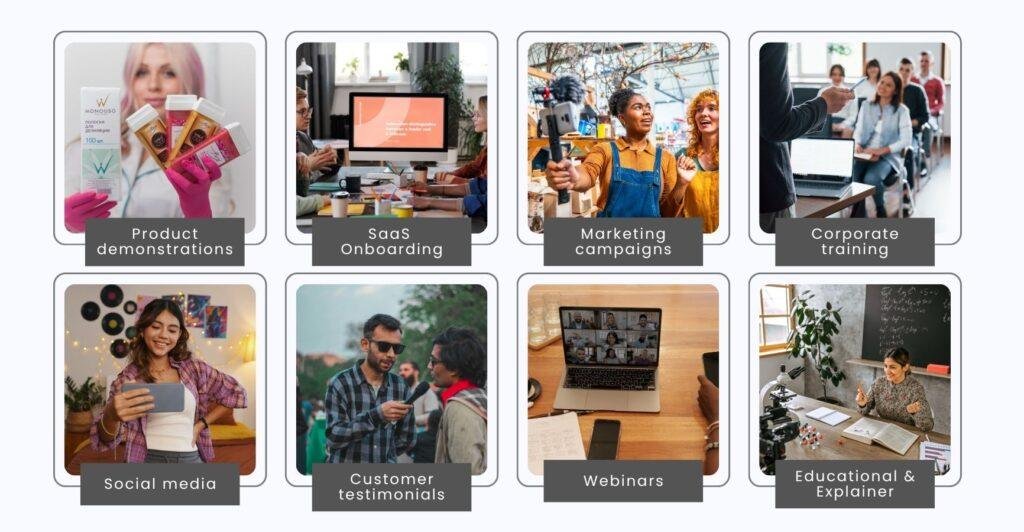
Today’s businesses localize various types of videos, including:
- Product demonstrations
- SaaS onboarding videos
- Marketing campaigns
- Corporate training videos
- Social media videos
- Customer testimonials
- Webinars
- Educational content
- Explainer videos
As international competition increases, localized video content has become a strategic investment instead of an optional marketing tactic.
Why Are Video Localization Services Becoming Essential for Global Marketing?
Digital audiences consume more video content than ever before. However, consumers also expect brands to communicate in their native language and respect local cultural preferences.
Netflix offers one of the strongest examples of localization at scale. The company now provides subtitles, dubbing, and accessibility features in more than 30 languages. In 2025, 70% of viewing on Netflix came from members watching content from a country other than their own, demonstrating how localization helps content cross geographical boundaries.
For businesses, this trend creates an important opportunity. A product video produced once can continue generating leads across multiple countries when localized effectively. Instead of creating entirely new marketing campaigns for every region, organizations can adapt existing content while maintaining consistent branding.
Localization also supports modern search behavior. People increasingly search YouTube and Google using keywords in their native language. By localizing video titles, descriptions, subtitles, and transcripts, businesses improve discoverability in international search results while creating a better viewing experience.
How Does Video Localization Work? Understanding the Complete Process
Effective video localization services involve much more than translating spoken dialogue. Every element that influences the viewer’s experience should feel natural within the target market.
A typical localization workflow includes several stages.
1. Video Translation Services
Professional linguists translate the original script while preserving the intended meaning, tone, and marketing message. Rather than translating word for word, they adapt expressions so they sound natural to native speakers.
For example, an English slogan that relies on humor may require a completely different phrase in German or Spanish to achieve the same emotional impact.
2. Subtitle Localization
Adding subtitles involves much more than displaying translated text onscreen. Professional subtitle localization considers:
- Reading speed
- Character limits
- Line breaks
- Timing synchronization
- Cultural expressions
- Accessibility standards
Well-localized subtitles improve comprehension while keeping viewers focused on the visuals instead of struggling to keep up with text.
3. Video Dubbing
Professional video dubbing replaces the original audio with native voice actors who match the emotion, pacing, and personality of the original speaker.
Recent platform updates reflect growing demand for multilingual viewing experiences. Netflix now allows TV viewers to choose from the full list of available subtitle and dubbing languages for supported titles, making international content more accessible than ever.
For marketing videos, high-quality dubbing often creates a stronger emotional connection than subtitles alone because viewers can focus entirely on the visual story.
4. Visual Localization
Successful localization also modifies visual elements when necessary.
This may include:
- Replacing on-screen text
- Updating currencies
- Changing measurement units
- Adapting graphics
- Modifying date formats
- Localizing screenshots
- Updating maps and regional references
These adjustments help businesses present a polished, market-specific experience instead of an obvious translation.
Which Businesses Benefit the Most from Video Localization Services?
Almost every industry can benefit from localization, but some sectors experience especially strong returns.
| Industry / Sector | How Localization Is Used | Benefits / Outcomes |
|---|---|---|
| SaaS Companies | Use localized onboarding videos to support users in international markets. | Improves product adoption and helps global customers understand the product better. |
| Marketing Teams | Create multilingual advertising campaigns while maintaining brand consistency. | Increases audience engagement and strengthens global brand presence. |
| E-learning Providers | Localize educational videos to make courses accessible to students worldwide. | Expands reach without the need to recreate entire courses. |
| Healthcare Organizations | Translate patient education materials into different languages. | Improves accessibility, communication, and patient understanding. |
| Manufacturing Companies | Localize safety training videos for international teams. | Ensures compliance and reduces workplace risks. |
| E-commerce Brands | Use localized product demonstrations and customer testimonials. | Builds buyer confidence and increases sales in international markets. |
| Common Goal Across Industries | Create content that feels personally relevant to each audience. | Makes customers feel that the content was designed specifically for them. |
The common goal across these industries is simple: make customers feel as though the content was created specifically for them.
Why Do Video Localization Services Deliver Better ROI for Global Businesses?
Publishing videos in multiple languages is not just about increasing views—it is about reaching the right audience with content they understand and trust. Businesses that invest in video localization services often see improvements across the entire customer journey, from awareness to conversion and retention. Instead of creating new videos for every market, localization allows companies to maximize the value of existing content while expanding their global reach.
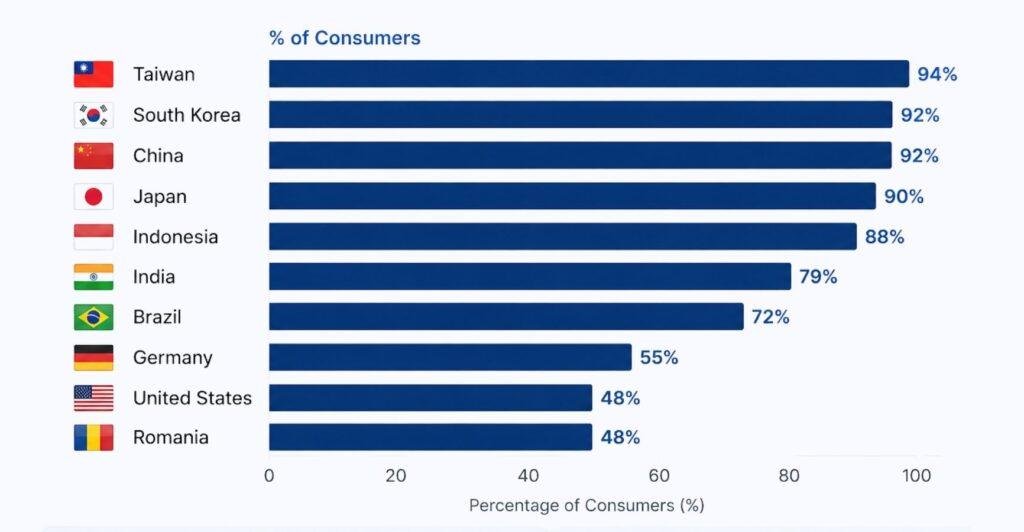
As the graph illustrates, language preference significantly influences consumer decisions, making video localization a crucial strategy for connecting with international audiences.
Consumers also reward brands that communicate in their native language. According to a 2020 CSA Research survey of more than 8,700 consumers in 29 countries, 76% of online shoppers prefer buying products with information available in their own language, and 40% won’t purchase from websites in other languages. Although the study focuses on digital content broadly, the same principle applies to video because it has become one of the primary ways businesses educate and influence buyers.
For marketing teams and SaaS companies, this means a single localized product demo, onboarding tutorial, or promotional campaign can generate engagement in multiple markets without rebuilding the content from scratch.
Benefits of Video Localization Services
Every business wants better engagement, stronger customer relationships, and higher returns on marketing investments. Video localization supports these goals by making content more accessible, relevant, and persuasive across different regions.
1. Reach More Customers Across International Markets
English remains one of the world’s most widely used business languages, but it is far from universal. Millions of potential customers prefer consuming content in their native language, even when they understand English.
When businesses localize videos into languages such as Spanish, French, German, Japanese, Arabic, or Portuguese, they significantly expand their addressable audience. This approach also allows brands to enter new regions faster because the content already aligns with local expectations.
Instead of producing ten separate marketing campaigns, companies can adapt one high-performing campaign for multiple countries, saving both time and production costs.
2. Improve Viewer Engagement
People naturally engage more with content that feels familiar. Localized subtitles, native voiceovers, and culturally appropriate visuals help viewers stay focused because they do not have to translate information mentally while watching.
Research from Netflix highlights the importance of accessibility in viewer behavior. The company reported that nearly half of all viewing hours in the United States now use subtitles or captions, showing that subtitles have become a mainstream viewing preference rather than an accessibility feature alone.
Longer watch times often translate into stronger brand recall, higher click-through rates, and better campaign performance across platforms like YouTube, LinkedIn, and social media.
3. Build Trust Through Cultural Relevance
Localization goes beyond language. It demonstrates that a company understands local customs, communication styles, and customer expectations.
For example, colors, gestures, humor, and symbols can carry different meanings across cultures. A campaign that performs exceptionally well in North America may require visual adjustments before it resonates with audiences in East Asia or the Middle East.
These cultural adaptations make brands appear more authentic and respectful, helping establish credibility in competitive international markets.
4. Increase Conversion Rates
Every marketing video has a goal—whether it is encouraging viewers to request a demo, purchase a product, download software, or subscribe to a service. Localization removes language barriers that often prevent viewers from taking those actions.
When customers clearly understand product features, pricing, onboarding instructions, and support information, they feel more confident making purchasing decisions.
For SaaS companies in particular, localized product demonstrations and onboarding videos can reduce user confusion while increasing product adoption in global markets.
5. Strengthen International SEO Performance
Many businesses optimize written content for search engines but overlook video optimization. Localized videos improve visibility across international search results by targeting keywords that users actually search in their native language.
Professional video translation services typically localize:
- Video titles
- Meta descriptions
- YouTube descriptions
- Closed captions
- Video transcripts
- Thumbnail text
- On-screen graphics
These elements help search engines understand multilingual content while making videos easier for local audiences to discover.
6. Improve Accessibility for Every Viewer
Accessibility has become an essential part of digital communication rather than a compliance requirement alone. Localized subtitles and captions help viewers who are deaf or hard of hearing while also supporting people watching videos in sound-sensitive environments.
Many users now consume video content during commuting, at work, or in public spaces where audio is unavailable. Providing professionally localized subtitles ensures your message reaches viewers regardless of how they choose to watch.
7. Maximize the Value of Existing Video Content
Producing professional videos requires significant investments in scripting, filming, editing, and post-production. Localization extends the lifespan of those assets by making them useful across multiple regions.
Instead of creating entirely new videos for every country, businesses can localize successful content and distribute it through regional marketing campaigns. This approach improves return on investment while maintaining consistent messaging across international markets.
How Can Businesses Build an Effective Video Localization Strategy?
Localization delivers the best results when businesses follow a structured process instead of translating videos one project at a time.
Define Your Target Markets
Identify the countries and languages that align with your business goals. Market research should consider customer demand, purchasing behavior, local competitors, and regional regulations before selecting target languages.
Understand Local Culture
Every market has unique communication preferences. Research cultural norms, holidays, colors, symbols, humor, and purchasing behaviors before adapting content. For example, promotional messaging that emphasizes individual achievement may perform differently in cultures that value community and collective success.
Choose the Right Localization Method
Different types of videos require different localization approaches.
- Product tutorials often benefit from subtitles combined with localized interface graphics.
- Brand storytelling videos usually perform better with professional dubbing.
- Training videos may require voice-over, translated documentation, and localized graphics.
Selecting the appropriate method improves both viewer experience and production efficiency.
Work with Native Linguists
Machine translation has improved significantly, but it still struggles with tone, emotion, humor, and cultural nuance.
Native-language professionals understand local expressions, business terminology, and audience expectations. Their expertise helps maintain brand consistency while avoiding translation mistakes that could confuse or offend viewers. Many successful localization workflows now combine AI-powered translation for speed with human review for quality assurance.
Test Before Launching
Localization should include a review process involving native speakers, regional marketing teams, and quality assurance specialists.
Testing helps identify issues such as:
- Subtitle timing errors
- Audio synchronization problems
- Cultural misunderstandings
- Incorrect graphics
- Formatting inconsistencies
A thorough review ensures viewers receive a polished experience that reflects your brand professionally.
What Common Video Localization Mistakes Should Businesses Avoid?
Even experienced organizations can reduce the effectiveness of localized content by overlooking important details.
The most common mistakes you can make:
- Translating words instead of adapting the message.
- Ignoring cultural differences.
- Using automated translation without human review.
- Choosing low-quality voice talent for dubbing.
- Forgetting to localize graphics, screenshots, and on-screen text.
- Skipping multilingual SEO optimization.
- Using subtitles with poor timing or formatting.
- Publishing videos without testing them with native speakers.
Avoiding these mistakes helps businesses deliver a consistent customer experience while protecting their global brand reputation.
How Is AI Changing Video Localization Services?
Artificial intelligence has transformed video localization by reducing turnaround times and automating repetitive tasks. AI-powered tools can now generate transcripts, translate scripts, create synthetic voiceovers, and synchronize subtitles much faster than traditional workflows.
However, AI alone cannot fully replace human expertise. Marketing messages depend on emotion, context, humor, and cultural sensitivity—areas where experienced linguists continue to play a critical role. Businesses increasingly adopt a hybrid workflow that combines AI for efficiency with professional editors for quality and cultural accuracy.
As AI technology continues to evolve, organizations that balance automation with human review will be better positioned to deliver scalable, high-quality multilingual video experiences
What Does the Future Hold for Video Localization Services?
The demand for multilingual video content is growing rapidly as businesses compete for attention across international markets. However, the future of video localization is not just about converting words from one language to another—it is about creating meaningful experiences that feel native to every audience.
Global brands are no longer asking, “How can we translate this video?” They are asking, “How can we make this video feel like it was created specifically for this market?”
This shift has changed the role of localization professionals. Linguists, translators, cultural consultants, and quality specialists now play a strategic role in helping brands communicate effectively across borders.
According to a report by Grand View Research, the global language services market continues to expand as businesses increase investment in translation, interpretation, and localization solutions. This growth reflects a simple reality: companies that enter new markets cannot rely on direct translation alone. They need linguistic expertise that understands cultural expectations, industry terminology, and audience behavior.
For video content, this becomes even more important because viewers do not just process words, they respond to emotions, visuals, tone, voice, and cultural context.
AI and Human Linguistic Expertise: Building the Next Generation of Localization
Artificial intelligence has transformed the localization workflow. AI-powered tools can now assist with transcription, translation memory, subtitle generation, voice synthesis, and content adaptation. These technologies help localization teams complete projects faster and manage large volumes of multilingual content efficiently.
However, successful localization still depends on human expertise.
A machine can translate a sentence, but it may not understand whether the message sounds natural in a specific culture. It may miss humor, emotional tone, regional expressions, or industry-specific terminology that influences how audiences perceive a brand.
For example, a software company launching a product video in Germany requires more than German subtitles. The content must reflect German business communication preferences, technical terminology, and expectations around accuracy and professionalism. Similarly, a marketing campaign entering Japan may require adjustments in tone, visuals, and messaging style to align with local consumer behavior.
This is where professional linguists create real value. They ensure that localized videos maintain the original brand identity while becoming culturally relevant for each target audience.
The most effective localization strategies today combine AI speed with the judgment of experienced language professionals. This hybrid approach allows businesses to achieve scalability without sacrificing quality.
Why Cultural Intelligence Defines Successful Video Localization
Language connects people, but culture determines whether a message truly resonates.
A successful video localization project considers factors beyond translation, including:
- Audience preferences
- Communication styles
- Social references
- Visual symbolism
- Humor and storytelling approaches
- Regional expectations
- Industry-specific terminology
A phrase that creates excitement in one country may sound unclear or ineffective in another. A color, gesture, or visual element that represents positivity in one market may have a completely different meaning elsewhere.
Professional localization teams analyze these details before a video reaches the target audience. They help businesses avoid cultural mistakes that can damage credibility and reduce customer trust. This is particularly important for industries such as healthcare, technology, education, finance, and e-commerce, where accuracy and trust directly influence customer decisions.
When viewers feel that a brand understands their language and culture, they are more likely to engage, remember the message, and act.
Why Businesses Need a Strategic Localization Partner
Many companies underestimate the complexity of video localization. They assume that translating subtitles or adding voice-over is enough to prepare content for global distribution. However, professional localization requires coordination between multiple specialists.
A reliable localization partner manages the complete process, including:
- Script adaptation by native linguists
- Subtitle creation and synchronization
- Voice-over and dubbing management
- Cultural review
- Linguistic quality assurance
- Terminology management
- Multilingual SEO optimization
- Final content testing
This structured approach ensures consistency across every market while allowing businesses to scale their global communication efforts.
For companies producing frequent marketing videos, training materials, product demonstrations, or customer education content, a professional localization workflow saves time and protects brand reputation. Instead of creating separate content from scratch for every country, organizations can maximize the value of existing videos by adapting them for multiple audiences.
Conclusion
Video content has become one of the most powerful tools for educating customers, building brand awareness, and driving conversions. However, global success requires more than publishing videos in a single language. Businesses must create experiences that feel natural, relevant, and trustworthy for audiences across different cultures.
Professional video localization services help organizations achieve this by combining linguistic expertise, cultural understanding, advanced technology, and quality-focused processes. From subtitle localization and video translation services to professional dubbing and multilingual content adaptation, every step contributes to stronger audience connections.
As businesses continue expanding internationally, the ability to communicate authentically across languages will become a key competitive advantage. Companies that invest in expert localization today will be better positioned to engage global audiences tomorrow.
Ready to Transform Your Videos Into Global Experiences That Connect With Every Audience?
Monisa Enterprise provides professional video localization services, video translation services, subtitle localization, and multilingual video solutions that help brands communicate effectively across international markets.
Whether you need localized marketing videos, training content, product demonstrations, or global campaigns, our linguistic experts ensure your message stays accurate, culturally relevant, and impactful.
Partner with Monisa Enterprise today and unlock the power of global communication through expert video localization.