Multilingual AI Data Collection Services
Your model is only as good as the data it trains on. When that data needs to span dozens of languages — including ones where off-the-shelf datasets do not exist — most providers stall. They lack the bench depth, the QA controls, or the delivery infrastructure to produce clean, labeled data at the pace your sprint cycles demand.
MoniSa Enterprise collects, curates, and delivers multilingual training data across 300+ languages and 4,500+ dialects. Speech, text, image, video, audio — every modality, governed by a 3-layer QA framework with documented IAA monitoring. ISO 9001:2015 and ISO 27001:2013 certified.
What We Collect
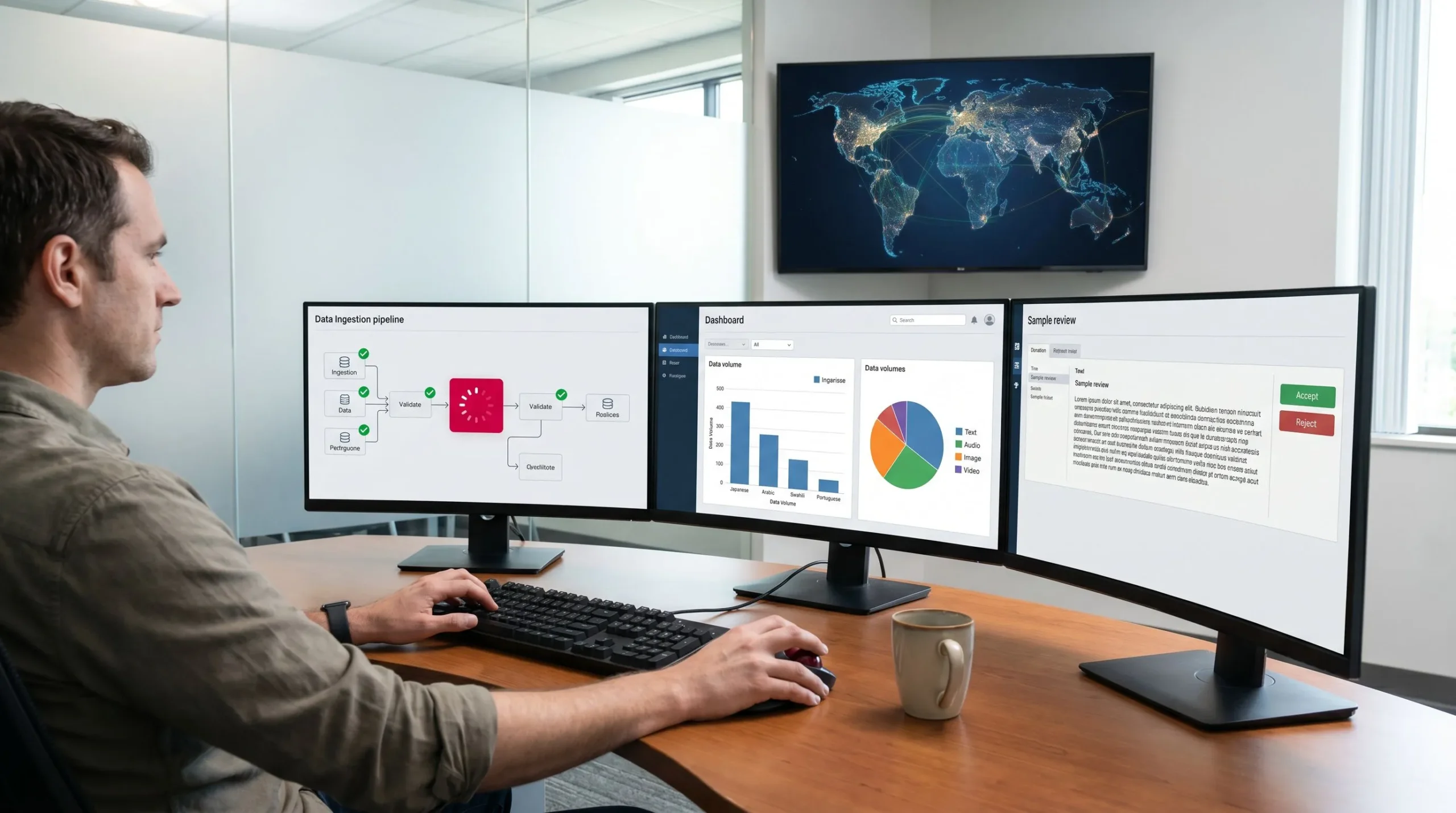
Six data types. Each with high-volume collection and annotation capacity.
| Data Type | Collected | Annotated |
|---|---|---|
| Speech Data | 85,000+ hours | — |
| Image Data | 130,000+ units | 105,000+ units |
| Text Data | 110,000+ units | 115,000+ units |
| Video Data | 95,000+ units | 80,000+ units |
| Audio Data | 75,000+ hours | 90,000+ units |
| Crowdsourced Data | 120,000+ units | — |
Beyond raw collection: 125,000+ units labeled across bounding box, polygon, landmark, semantic segmentation, and instance segmentation tasks. 120,000+ LLM prompts created and validated for safety, toxicity, and cultural appropriateness across 54+ language pairs.
Why AI Teams Choose MoniSa for Data Collection
step 1
Rare language coverage that actually exists on a bench
110+ rare and indigenous language pairs — pre-vetted, not sourced on demand. Languages like Chittagonian, Dzongkha, Marshallese, Highland Quichua, and Tok Pisin. When a competitor tells you they “can source” a language, they mean weeks of scrambling. We mean a calibrated team ready to produce within days.
Ramp timeline: 10 to 50 resources per language in 7-10 days via pre-screened standby pools and accelerated screening.
step 2
QA controls that reduce rework cycles
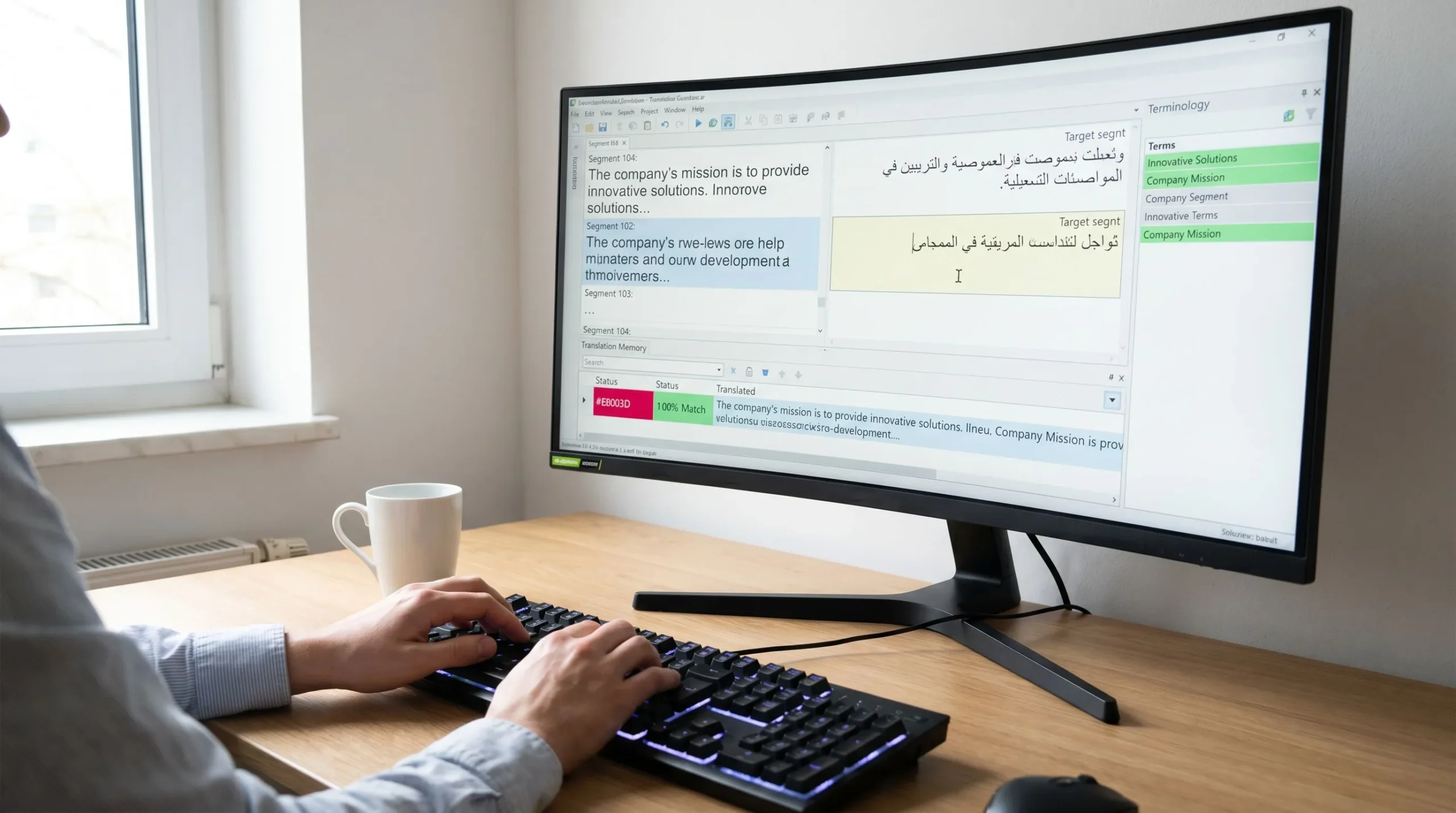
Every batch passes through a 3-layer QA framework:
- Pre-production: Resource screening (nativity verification, domain questionnaire, 1:1 screening call), L1/L2/L3 tier classification, project-specific calibration against gold standards, and pilot batch with 100% senior review.
- In-production: 10-20% sampling by senior L2/L3 reviewers (adjustable to 100%). IAA monitoring per batch with 80-85% threshold. Errors flagged same shift — not batched for end-of-week surprises.
- Post-delivery: MQM-based error scoring (Critical x5, Major x2, Minor x1). Quality score = 100 minus weighted error rate. Pass threshold: 94% for production work.
Result: sub-2% rework rates on rare-language projects — based on our most recent engagements across 8+ rare languages.
step 3
Delivery infrastructure built for sprint cadences
Rolling batch delivery aligned to your sprint cycles — daily, weekly, or per-milestone. Each batch is self-contained: assigned, produced, QA’d, and delivered within the cadence window. Named dedicated teams carry project context batch over batch. Backup bench pre-staged at 1.5-2x active headcount for Tier 1 languages.
Dedicated PM responsive within 2 hours during active production. Operations lead escalation SLA: 4 hours.
step 4
Error Taxonomy Scoring (Day 3-5)
Every discrepancy gets scored using MQM-based error classification:
- Critical (x5 weight): meaning reversed, data fabricated, safety-relevant mislabel
- Major (x2 weight): partial meaning loss, wrong category assignment, missing required field
- Minor (x1 weight): formatting inconsistency, slight nuance missed, style deviation
Quality score = 100 – [(weighted errors / total units) x 100]. This gives you a single number per language, per task type, per annotator cohort.
Languages and Coverage
300+ languages. 4,500+ dialects. 140+ languages delivered specifically on AI data services projects.
Full-stack coverage (collection + annotation + audio + subtitle + dubbing) for languages including Bhojpuri, Khmer, Pashto, Dari, Amharic, Swahili, and Haitian Creole. TEP + annotation coverage across 50 rare and low-resource language pairs spanning South Asian, Southeast Asian, Central/West Asian, East African, West/Central African, and Pacific/Oceanic language families.
Need coverage for a language not on the list? Tier 3 and rare language sourcing via diaspora, academic, and community networks takes 2-4 weeks. Replacement SLA for rare languages: 3-7 business days.
How We Work
- Scope and calibrate. Define data types, languages, annotation guidelines, acceptance criteria, and delivery cadence. Build calibration sets against your gold standard.
- Recruit and vet. Assemble native-speaker teams from a global network of tens of thousands of vetted linguists, annotators, and voice artists. Every contributor passes nativity verification (2 government IDs), domain questionnaire, screening call, and project-specific knowledge test.
- Pilot batch. First 5-10% of volume undergoes 100% senior review. Calibrate IAA scores. Lock annotation guidelines before full production.
- Produce in rolling batches. Named teams produce data in sprint-aligned batches. Same reviewers across batches for consistency. IAA monitored per batch. Errors flagged in real time.
- Deliver and iterate. Each batch delivered with quality metrics, volume reports, and issue logs. Weekly reporting: volume vs target, quality scores, utilization, escalations, and risks.
Not sure if your data pipeline is ready? Start with an AI Data Readiness Audit
Production Outcomes
28,000+ hours across 50+ languages — 99.2% accuracy
Transcription, annotation, labeling, and segmentation for a global AI company. Languages included Chittagonian, Dzongkha, Herero, and Highland Quichua. Delivered via rolling monthly batches with named reviewer teams. Why it worked: pre-vetted rare-language bench eliminated sourcing delays. IAA monitoring caught drift before it compounded.
789,000 words across 10+ rare languages — 25 days, 99.5% accuracy
Translation and evaluation set for an AI product company. Languages included Marshallese, Hmong, Hawaiian, Maori, Palauan, and Tahitian. Why it worked: 4 scripts (Latin, Devanagari, Arabic, Bengali) managed through script-specific QA protocols. Calibration sets built per language pair, not per project.
15,000+ hours across 60+ rare languages — 98.7% accuracy
Audio transcription for an AI data pipeline. Languages included Fanti, Chadian Arabic, Tok Pisin, and Teso across 4 script systems. Weekly batch delivery. Why it worked: L2/L3 reviewers assigned per language family. Batch-over-batch consistency maintained through named teams.
Explore our audio labeling services | Video annotation services
Frequently asked questions
What types of AI training data does MoniSa collect?
Speech, text, image, video, audio, and crowdsourced data. We also handle annotation across multiple task types: bounding box, polygon, landmark, semantic segmentation, instance segmentation, and OCR validation. For LLM training specifically, we have created and validated 120,000+ prompts across 54+ language pairs.
How many languages can you support for data collection?
300+ languages and 4,500+ dialects. 140+ languages delivered on AI data services projects specifically. 110+ rare and indigenous language pairs with pre-vetted bench capacity — not sourced on demand.
What QA controls do you apply to collected data?
A 3-layer QA framework: pre-production screening and calibration, in-production sampling with IAA monitoring (80-85% threshold), and post-delivery MQM-based error scoring. Pass threshold is 94% for production work. Errors are flagged same shift, not batched.
How fast can you ramp a data collection team?
10 to 25 resources per language in 3-5 days from pre-screened standby pools. 10 to 50 resources in 7-10 days with accelerated screening. New Tier 1-2 languages: 1-2 weeks. Rare and Tier 3 languages: 2-4 weeks via diaspora, academic, and community sourcing channels.
What is your delivery model for large-scale projects?
Rolling batch delivery aligned to your sprint cadence — daily, weekly, or per-milestone. Each batch is self-contained with its own QA pass. Named dedicated teams carry context across batches. Backup bench pre-staged at 1.5-2x active headcount. Dedicated PM with 2-hour response SLA during production.
Do you support annotation alongside collection?
Yes. Collection and annotation run as an integrated pipeline. 125,000+ units labeled. We handle semantic segmentation (AR, VR, biometrics), bounding box (object detection), polygon (retail, medical imaging), landmark (facial recognition, gesture), and OCR data collection and validation.
What certifications does MoniSa hold?
ISO 9001:2015 (Quality Management), ISO 27001:2013 (Information Security), and industry memberships in GALA, ATC, EUATC, Elia, and CITLoB. GDPR compliant with NDAs for all suppliers and encrypted data handling.
Tell us the languages, data types, and volume. We will respond with a coverage assessment, team composition plan, and delivery timeline within 48 hours.