Think Machine Translation Can Replace Human Expertise? Think Again! Machine Translation (MT) has revolutionized the way we handle linguistic challenges, but can it truly match the nuance and accuracy of human translators? Let’s dive deep into the reality behind the tech. Did you know that while MT can speed up translation processes by up to 70%, it still struggles with context and cultural nuances? Let’s explore why this matters for your projects.
Introduction
Seventy-five percent of businesses using Machine Translation (MT) still rely on human editing. Why is that? In an era where speed and cost savings are paramount, MT promises a fast and efficient way to bridge language gaps. But does it truly replace the nuanced understanding a human translator provides?
Whether you’re a Project Manager juggling multiple localization tasks, a Talent Acquisition Manager expanding your global team, or a Localization Manager aiming for cultural precision, it’s essential to know both the strengths and limitations of MT—and how best to combine it with human expertise.
What is Machine Translation?
Machine Translation refers to the use of software to translate text or speech from one language to another without human intervention. Powered by algorithms and artificial intelligence, MT systems like Google Translate and DeepL have made significant strides in recent years.
For professionals overseeing international projects, MT can streamline workflows and reduce costs. However, relying solely on MT without understanding its limitations can lead to miscommunications, cultural faux pas, and even legal issues. Balancing technology with human expertise ensures both efficiency and quality.
Key Benefits of Machine Translation
- Speed and Efficiency: MT can process large volumes of text in seconds.
- Cost-Effective: Reduces the need for extensive human translation resources.
- Scalability: Easily handles multiple languages simultaneously.
- Consistency: Maintains uniform terminology across translations.
Imagine translating the English phrase “Break a leg!” into another language using MT. Literally translated, it might come out as “Rompe una pierna!”, which loses the intended meaning of wishing someone good luck. This is where human translators shine, ensuring idiomatic expressions are appropriately conveyed.
Statistics Speak
- 70% of businesses report increased efficiency with MT.
- 65% cite cost savings as a primary benefit.
- However, 45% acknowledge the need for human post-editing to ensure quality.
At MoniSa Enterprise, we integrated MT with human expertise to enhance our translation services. By implementing a hybrid model, we reduced localization time by 30% while maintaining a 99% quality assurance rate. This approach allowed us to handle larger projects without compromising on accuracy or cultural relevance.
Are you leveraging MT to its full potential while mitigating its weaknesses? It’s time to assess and optimize your translation strategy to balance speed with quality.
Deep Explanation: The Mechanics Behind Machine Translation
MT systems operate primarily through two types:
- Rule-Based MT: Utilizes grammatical rules and bilingual dictionaries.
- Neural MT: Employs deep learning algorithms to understand context and semantics.
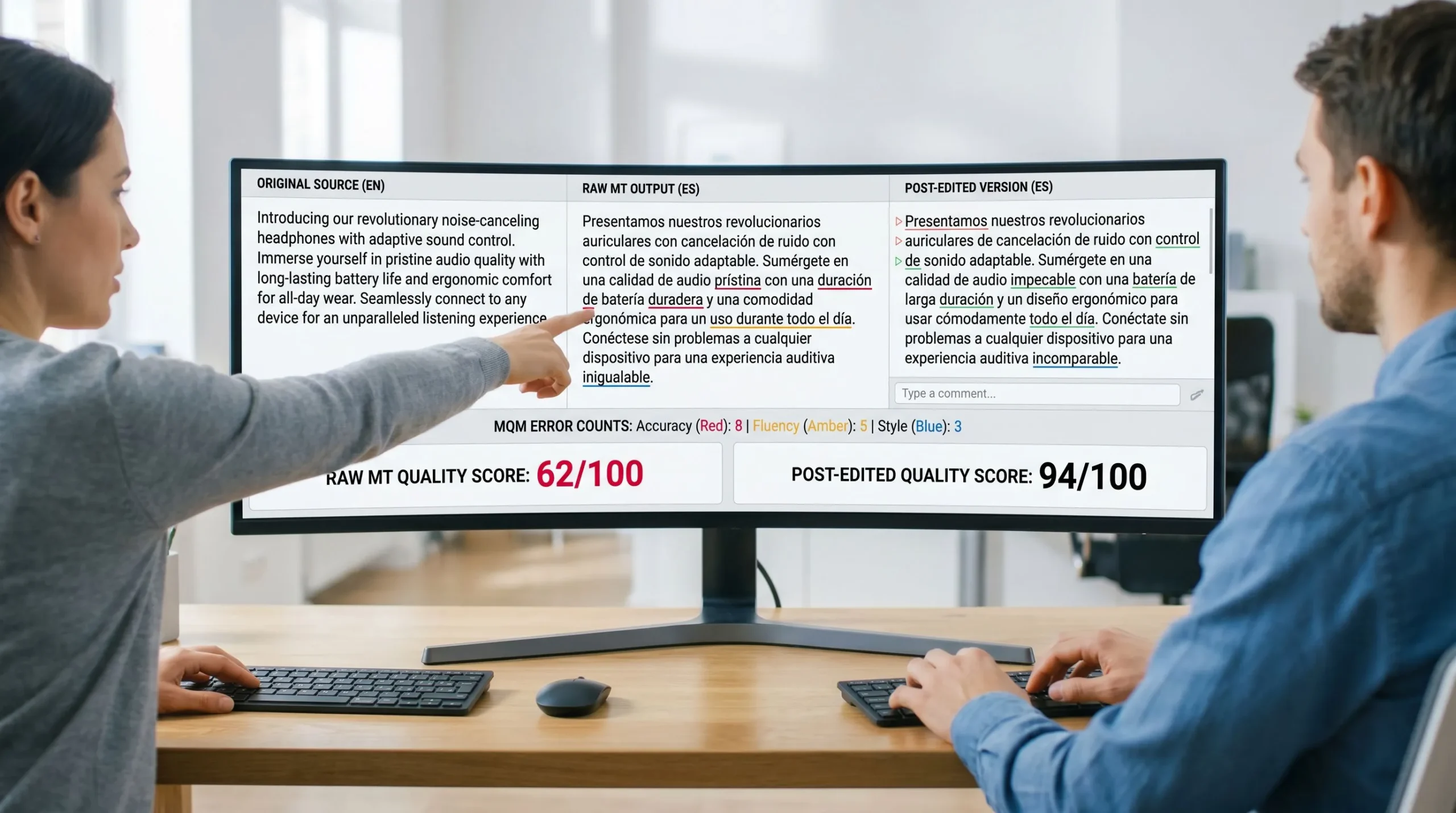
Neural MT, the more advanced of the two, mimics human brain processes, allowing for more natural and accurate translations. However, it still requires human oversight to handle nuances and specialized terminology.
Trends Shaping the Future of Machine Translation
- AI Advancements: Continuous improvements in neural networks enhance MT accuracy.
- Integration with CAT Tools: Combining MT with Computer-Assisted Translation tools for better workflow.
- Real-Time Translation: Increasing demand for instant translation in communication platforms.
- Customization: Tailoring MT models to specific industries or company terminology.
Machine Translation leverages vast datasets and machine learning to improve over time. By analyzing millions of text samples, MT systems learn context, idiomatic expressions, and even cultural references, making translations more accurate and contextually appropriate.
Localization Managers benefit from scalable solutions that maintain consistency across different languages, while Talent Acquisition Managers can reach a broader, more diverse talent pool without language barriers.
Factors Influencing Machine Translation Reliability
- Language Pair: Some languages have more robust MT support than others.
- Contextual Complexity: Technical, legal, or highly specialized texts may require human intervention.
- Cultural Nuances: Understanding and conveying cultural context remains a challenge for MT.
- Continuous Learning: MT systems need ongoing updates and training to stay accurate.
Combine MT with human post-editing to achieve the best results. Use MT for initial drafts and rely on professional translators to refine and ensure cultural and contextual accuracy. This hybrid approach maximizes efficiency without sacrificing quality.
Conclusion: Balancing Technology with Human Touch
Machine Translation is a powerful tool that can significantly enhance your translation processes. However, its reliability is maximized when combined with human expertise. At MoniSa Enterprise, we champion a hybrid model that leverages the strengths of both MT and human translators, ensuring your projects are both efficient and culturally resonant.
Which translation strategy works best for your team? Share your experiences in the comments below!