Multilingual Video Annotation for AI
Frame-level accuracy that holds across batches and languages. AI teams choose MoniSa when annotation consistency cannot slip between deliveries.
What Is Video Annotation?
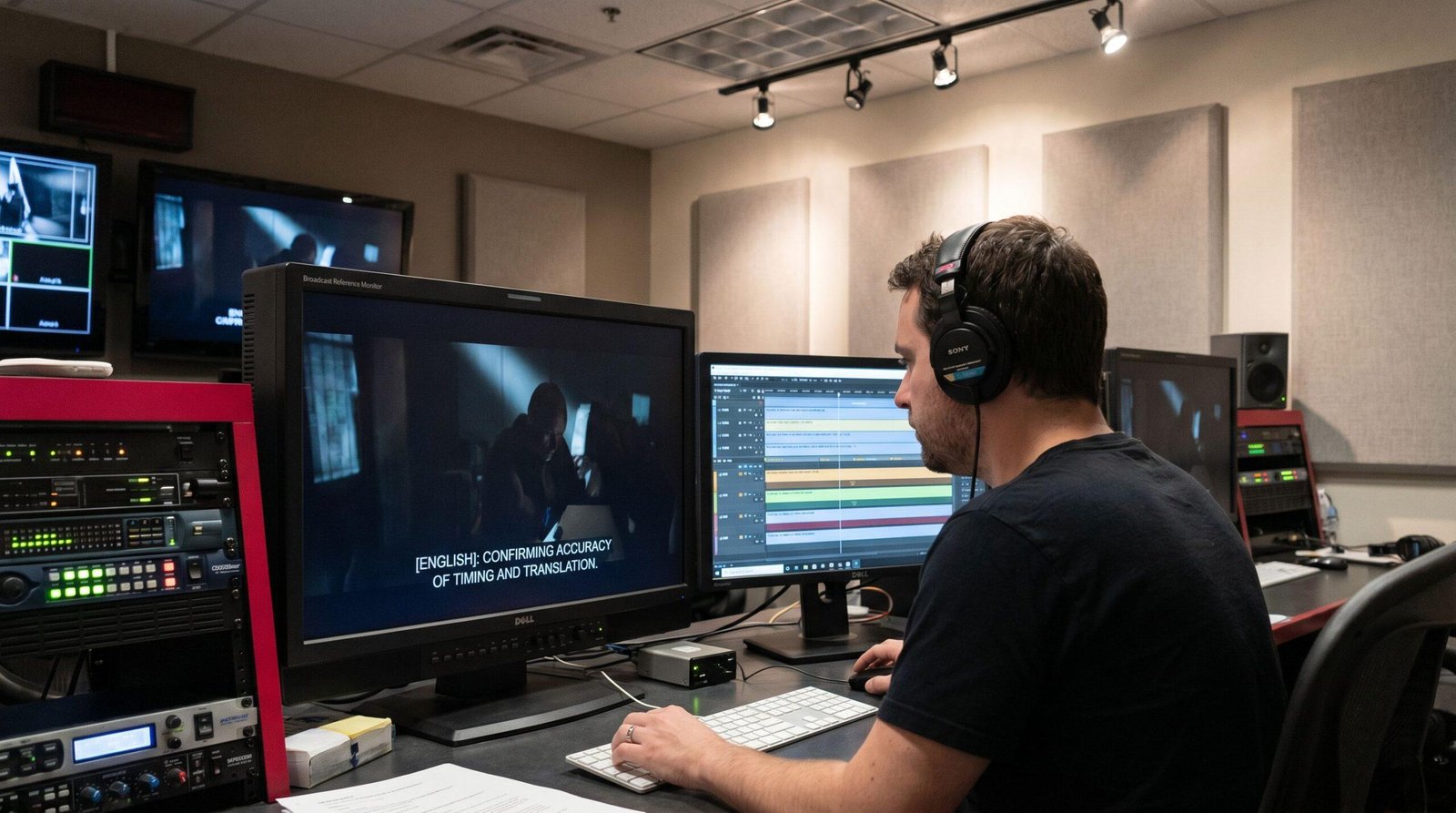
Video annotation is the process of labeling objects, actions, and events within video frames so machine learning models can recognize and interpret visual information. Every frame carries spatial and temporal data that your model needs to understand movement, classify objects, and detect anomalies.
Unlike static image annotation, video adds complexity: objects move, occlude each other, change appearance across lighting conditions, and interact in sequences. Annotators must track these changes frame by frame while maintaining label consistency across the entire clip.
When your training data spans multiple languages and regions, that complexity multiplies. Street signs in Arabic script. Medical imaging reports in Japanese. Retail shelf labels in Hindi. Each requires annotators who read the source language natively and understand the visual context behind it.
MoniSa provides this combination: trained annotators who work across 140+ languages for AI data services, paired with a QA system that catches inconsistencies before they reach your model.
Video Annotation Types We Deliver
We match the annotation method to your model’s requirements. Each type serves a different training objective.
Bounding Box Annotation
Rectangular labels around objects for detection models. Used in object detection, surveillance systems, and inventory tracking. Fast to produce, effective for models that need location without precise shape data.
Polygon Annotation
Multi-point outlines that follow irregular object boundaries. Used in retail product detection, medical imaging, and industrial inspection where objects are not rectangular. More precise than bounding boxes, required when shape matters.
Semantic Segmentation
Pixel-level classification where every pixel in a frame receives a category label. Used in AR/VR scene understanding, content moderation, and environmental mapping. Produces the richest spatial data for your model.
Instance Segmentation
Combines semantic segmentation with individual object identification. Distinguishes between separate instances of the same object class. Used in biometrics, crowd analysis, and robotics where counting and tracking individual entities matters
Landmark Annotation
Key-point labeling on specific anatomical or structural features. Used in facial recognition (68-point face mesh), gesture detection, pose estimation, and motion capture. Requires annotators trained on precise coordinate placement.
OCR Data Collection and Validation
Text detection and transcription within video frames. Used for reading signs, documents, dashboards, and on-screen text across scripts (Latin, Arabic, Devanagari, CJK, Bengali, and more). Requires native-language annotators for accurate transcription.
The Multilingual Advantage
Most video annotation providers work in English and a handful of European languages. When your model needs to process video from Jakarta, Dhaka, Lagos, or Riyadh, they start sourcing annotators from scratch.
MoniSa operates differently. Our annotator network spans 300+ languages and 4,500+ dialects, with 140+ languages actively delivered on AI data services projects. That means:
- Native-language OCR accuracy: Annotators who read Bengali, Khmer, Tigrinya, or Pashto natively. No guesswork on script-heavy frames.
- Cultural context in labeling: Object classification that accounts for regional differences. A “vehicle” in rural Southeast Asia looks different from one in Berlin.
- Consistent reviewer calibration: Dedicated teams carry context from batch to batch. The same reviewers who annotated your first 5,000 frames handle the next 50,000.
- Pre-vetted rare language bench: 110+ rare and indigenous language pairs with active annotators, not sourced on demand.
This matters because annotation consistency drops when you swap annotators mid-project. IAA scores fall, rework cycles increase, and your model trains on conflicting labels. We prevent that by retaining dedicated teams across batches.
QA Controls That Protect Your Training Data
Bad annotations compound. One mislabeled frame propagates through temporal interpolation and corrupts hundreds of downstream labels. Our 3-layer QA framework catches errors before they reach your pipeline.
- Pre-Production Quality Gates
Every annotator passes a screening sequence: profile review, domain questionnaire, screening call, project-specific calibration against a gold standard (20-50 items), and a pilot batch with 100% senior review. Only L2 and L3 classified annotators work on production data. - In-Production Quality Controls
10-20% random sample review by senior annotators on every batch. Inter-annotator agreement (IAA) monitored per batch with a minimum threshold of 80-85%. Errors flagged same-shift, not batched. Two or more critical errors trigger a pause and recalibration. - Post-Delivery Quality Review
MQM-based error scoring: Critical errors weighted 5x, Major 2x, Minor 1x. Quality score = 100 – [(weighted errors / total units) x 100]. Production pass threshold: 94%. Anything below 85% triggers reassignment and root cause documentation.
This framework delivered 99.2% data accuracy on our largest annotation project: 28,000+ hours of transcription, annotation, labeling, and segmentation across 50+ languages.
Use Cases
Video annotation feeds models across industries. Here is where our multilingual capability and QA controls make the most difference.
- AR/VR and Spatial Computing — Semantic and instance segmentation for scene understanding. Landmark annotation for hand tracking and gesture recognition. Multi-language support for AR interfaces deployed across markets.
- Content Moderation — Frame-level classification of harmful, violent, or policy-violating content. Multilingual text detection via OCR for on-screen content in user-generated video. Cultural context reduces false positives in non-English markets.
- Medical Imaging and Diagnostics — Polygon annotation for organ boundaries, tumor regions, and tissue classification in video-based diagnostics (ultrasound, endoscopy). Annotators trained on medical labeling guidelines with strict data security under ISO 27001.
- Retail and E-Commerce — Product detection and shelf analysis via bounding box and polygon annotation. Multi-script label reading for inventory systems serving global markets.
- Surveillance and Security — Object tracking, anomaly detection, and event classification in multi-camera feeds. Instance segmentation for separating individuals in crowded environments.
- Sports and Motion Analysis — Landmark annotation for athlete pose estimation, ball tracking, and action recognition across broadcast footage.
Production Outcomes
AI Data Pipeline — 50+ Languages, 28,000+ Hours
A MAANG-tier technology company needed transcription, annotation, labeling, and segmentation across 50+ rare and low-resource languages including Chittagonian, Dzongkha, Herero, and Highland Quichua. MoniSa delivered rolling monthly batches with 99.2% data accuracy. The project required annotators across 4 script systems working under unified labeling guidelines.
Why it worked: Pre-vetted reviewer bench. Same annotator teams across batches. IAA monitoring per delivery cycle. No rework loops from reviewer churn.
Production Outcomes
Image and Video Data at Scale
Across all projects: 95,000+ video files processed (80,000+ fully annotated), 130,000+ images processed (105,000+ annotated), and 125,000+ data units labeled. Annotation types span semantic segmentation, instance segmentation, bounding box, polygon, landmark, and OCR across multiple domains.
Why teams stay: Batch-over-batch consistency. Dedicated project managers responsive within 2 hours. Backup bench pre-staged at 1.5-2x active headcount so projects never stall on sourcing.
Certifications
ISO 9001:2015 — Quality management across all service delivery. ISO 27001:2013 — Information security management for data protection during annotation projects. NDAs with all annotators. Encrypted data in transit and at rest. GDPR-compliant processes for EU-origin data.
Frequently asked questions
What video formats do you accept?
We work with MP4, AVI, MOV, MKV, and WebM. We handle frame extraction, preprocessing, and format conversion as part of project setup. If your pipeline uses a proprietary format, we adapt to your specifications.
How do you maintain annotation consistency across batches?
Dedicated annotator teams carry project context from batch to batch. We monitor inter-annotator agreement (IAA) on every delivery cycle with a minimum threshold of 80-85%. When IAA dips, we pause, recalibrate against gold standards, and resume only after alignment is confirmed.
Can you annotate video with non-Latin text (Arabic, CJK, Devanagari)?
Yes. Our OCR annotation and text detection work across Latin, Arabic, Devanagari, Bengali, CJK, Ge’ez, Khmer, and other scripts. Annotators are native speakers of the target language, not generalists using translation tools.
What is your typical turnaround for video annotation projects?
Timelines depend on annotation type, volume, and language complexity. A pilot batch (first 5-10% of project volume) typically delivers within 5-7 business days. Production batches follow a sprint cadence aligned to your delivery schedule (daily, weekly, or per milestone).
How do you handle data security for sensitive video content?
ISO 27001:2013 certified. NDAs with all annotators before engagement. Encrypted data in transit and at rest. Role-based access controls. No data stored beyond project requirements. GDPR-compliant processes for EU-origin data.
What annotation tools do you use?
We work with Label Studio, CVAT, and proprietary client tools. If your pipeline requires a specific annotation platform, we onboard to it. Our annotators are tool-agnostic and trained on multiple platforms.
Do you support annotation for rare or low-resource languages?
Yes. We maintain an active bench of annotators across 110+ rare and indigenous language pairs. These are pre-vetted, not sourced on demand. For Tier 3 languages, we activate community and diaspora networks with a 2-4 week ramp timeline.
Related Services
- AI Data Collection Services — Speech, text, image, video, and audio data across 140+ languages
- Audio Labeling Services — Audio annotation, transcription, and segmentation for AI models
- AI Data Readiness Audit — Assess your training data pipeline before scaling annotation
- Low-Resource Language Data — 110+ rare language pairs with active annotator bench
- Case Studies — Production outcomes across AI data services projects
Send us your hardest annotation task. We will deliver a pilot batch so you can evaluate frame-level accuracy, annotation consistency, and turnaround before committing to production volume.